

When love becomes an obsession: Relationship OCD (#2)
How intrusive doubts nearly destroyed my now marriage — and the principles that helped me recover.

Of all the OCD themes I have experienced throughout my life, relationship OCD was one of the most painful. Relationships aren’t supposed to be perfect. And uncertainty is certainly not unique to romantic love only. But relationships touch some of the deepest human needs: attachment, connection, belonging, intimacy and trust.
Relationship OCD, often shortened to rOCD, is a (REAL) form of OCD that attaches itself to the relationships and people we love. Although it’s most often discussed in the context of romantic partnerships, it can also affect relationships with family members, friends, children or even pets. In other words, any relationship that matters.
For some people, the obsession centers on their partner. Their mind latches onto perceived flaws, personality traits, habits or moral qualities until those become impossible to ignore. Others become consumed by doubts about whether they are truly loved, endlessly questioning for reassurance that never feels enough.
For me, however, the obsession wasn’t so much about my partner’s traits, nor character. It was about the relationship itself. The love I felt for him.
“What if this isn’t the right relationship? What if this isn’t real love? What if I’m settling? But I’ve always wanted to settle. What if I don’t know how to love? What is love exactly? How does one know, when one knows?”
These questions tend to escalate to obsession level because they target decisions that genuinely matter. Commitment matters. Parenthood matters. Choosing a life partner matters. OCD knows this. And it attacks the things we value most.
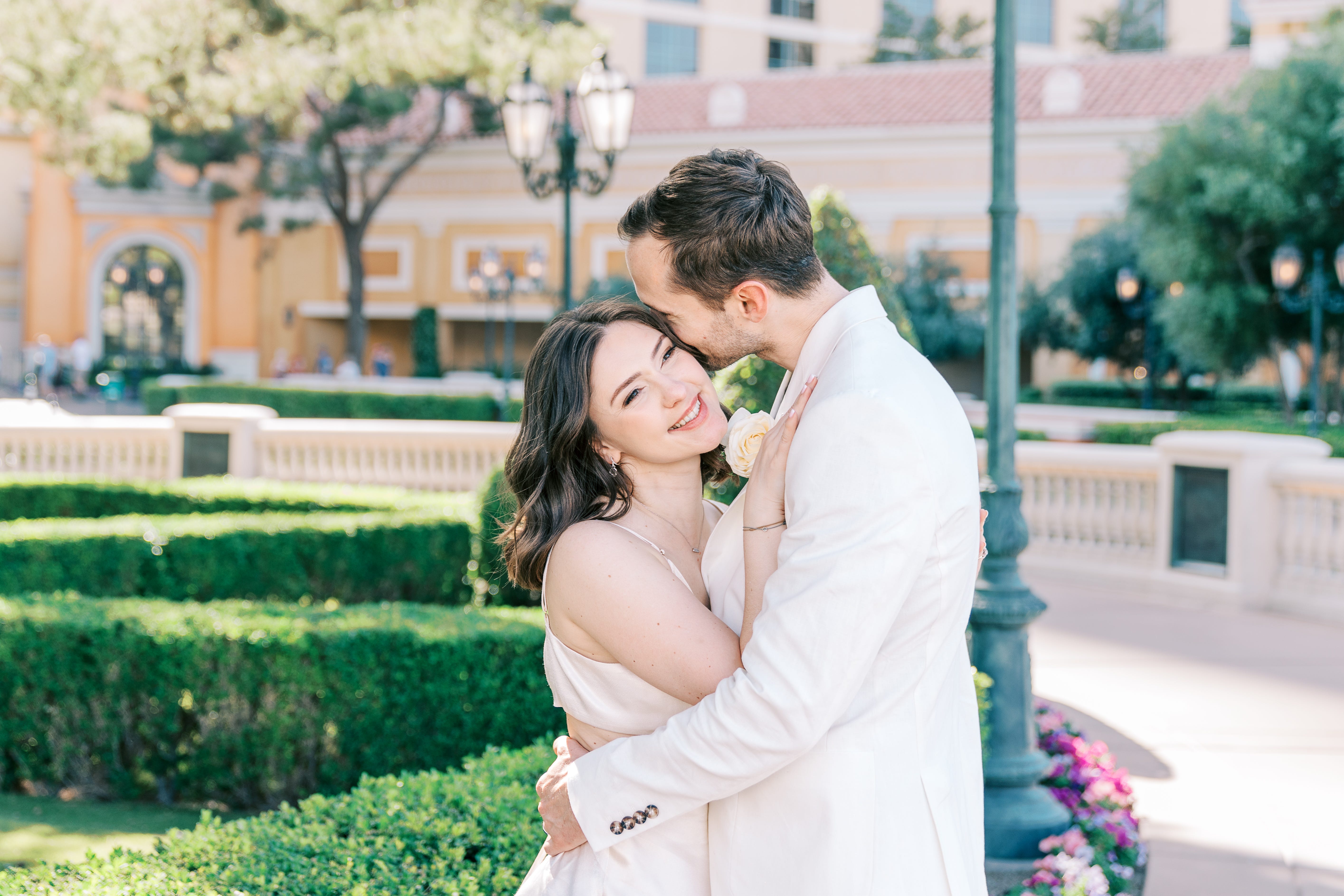
We’d only been together for two months in April 2019, and our relationship felt effortless. Like most couples, we were in our honeymoon phase. Everything felt exciting, reassuring and new. I didn’t need to ask myself whether I’d love him for the rest of my life because the answer seemed obvious. Besides, it was too early anyway. Yet almost overnight something changed. And it wasn’t the relationship, but my experience of it.
Later, I realized I’d felt that overwhelming sense of doom and anxiety even before our first date to the point that I wanted to call it off. I told myself back then it was simply the fear people often feel before a first date. But somewhere deep in my heart, I knew I was lying to myself. I had been there before. The dread, the pit in my stomach, the pain in my chest and the feeling that I might collapse under the weight of the fear were all painfully familiar. I just didn’t have a name for it yet.
The fireworks slowly gave way to something calmer, something that felt more like family. Ironically, I’d always believed that’s exactly what healthy relationships were supposed to do. Infatuation makes room for companionship. Excitement becomes trust. Passion becomes safety. Love becomes less about intensity and more about choosing each other, over and over again.
Still, between 2019 and 2020, my brain would oscillate between rOCD flare-ups and feeling normal and sane every couple of months At first the spikes lasted anywhere from a few hours to a couple of weeks. The anxiety was extremely high, and I performed countless compulsions, but I could still function. My compulsions have always been merely mental, but sometimes I’d experience physical (or behavioral) ones too, which I’d typically disguise as exercise, meditation or working. I didn’t know they were compulsions back then, but somehow I knew they weren’t helping. All I wanted was certainty that I wasn’t hurting someone I genuinely cared for; and I also needed to know for sure that the care I felt was actually love (even though my OCD was trying to convince me of the opposite).
Sometimes mindfulness without really knowing that was what I was doing, helped. Simply put, life happening actually helped by asking for my attention and presence. Sometimes a wonderful holiday together temporarily quieted the doubts, obsessions and compulsions.
But they’d always came back louder.
To the point that after a few months of COVID-19 lockdowns, my rOCD worsened dramatically. Living together, travel restrictions and the shrinking of life outside the relationship left my mind with endless opportunities to obsess over whether I truly loved him and whether our relationship was “right”, whether it was “the one”. By December, I could already barely catch my breath from OCD’s grip with compulsions consuming nearly 12 hours a day.
Then, in January 2021, he proposed. It was precisely when my OCD found its most fertile ground. And so the most heartbreaking, life-shrinking and cruel 8 months of my life began.
Love suddenly required something I had always struggled with: trust. Trust that feelings fluctuate. Trust that certainty is impossible. Trust that I didn’t need to analyze every emotion before allowing myself to build a future with someone. Instead, it felt as though I was gambling my entire life on a feeling I could never be completely certain about.
During this time OCD obsessions and compulsions consumed about 95% of my day and they were present at night too. I dreamed about my obsessions, and even when I woke up it felt as though I hadn’t slept at all. My mind never stopped racing. At one point I became convinced I was hearing voices. It was only my own inner chatter, but I genuinely believed I might be experiencing auditory hallucinations, which immediately triggered another OCD spiral. What if I was bipolar? What if I was schizophrenic? I’d also started suffering from severe depersonalization and derealization by March 2021. I’d genuinely and repeatedly implored my now husband to take me to our local psychiatric hospital several times and became incapable of spending time alone in our apartment fearing that I might snap and kill or hurt myself. I didn’t want to but I was too afraid of my own mind.
The questions never stopped. The answers never came. The rumination became an endless loop that consumed nearly every waking moment, and I couldn’t escape it. To cope with the anxiety, shame, doubt and fear, I relied on countless compulsions, most of them mental, but also behavioral:
Repeatedly checking my feelings and attraction (“Do I feel love now? Where do I feel the love? Is this love or something else? But why can’t I feel anything”)
Seeking reassurance from friends, family or the internet (Google, YouTube, Reddit, blogs and podcasts, social media apps; you name it, I’ve done them all)
Mentally reviewing memories for proof that I loved him (from our relationship or my past relationships)
Comparing our relationship to others or to an idealized standard
Avoiding intimacy or using it to “test” my feelings; avoiding conversations about our future together (including short-term plans)
Googling relationship advice, doing all sorts of compatibility and mental disorders tests, watching and reading every astro magazine or website
Compulsively confessing my thoughts and repeatedly praying, and asking for reassurance from our family priest (plot twist: I’m not even a religious person)
Avoiding places that could trigger any of my obsessions (like past places where I’d been with my ex, or places where I felt anxiety relative to my current relationship etc.)
I became afraid of smelling perfumes that could resemble to the ones my ex had because those could be signs that I didn’t love my partner
I became afraid of watching my favorite series fearing that if I found an actor to be attractive it meant I didn’t love my partner or that they’d trigger my obsessions
I stopped listening to music because everything was either triggering or a sign that our relationship was doomed
I was terrified to walk down the street and watch people’s faces or eyes for fear that I might uncontrollably fall in love and run away with someone. If I happened to order a coffee and a guy was the barista, I’d never look them in the eyes
and so, so many more…
I also fell into the endless “Why me?” and “Why can’t I just be normal, embrace love and be happy?” It got me nowhere. By then, my obsessions were jumping between themes several times a day. Relationship OCD was only one of them. Harm, sexual orientation, suicidal and contamination (mostly targeting untreatable diseases or STIs) OCD all took turns demanding 110% certainty and torturing my mind and soul.
Today, in 2026, I’m in complete remission and have been for the past three years. That doesn’t mean I’ve never experienced setbacks, but a setback isn’t the same as a relapse.
The framework I followed throughout therapy (alongside medication) became the foundation that helped me move into remission—not just from relationship OCD, but from every OCD theme I'd struggled with all my life.
To be honest, this foundation become my overall life’s principles. I really follow the principles below in both my professional and personal life.
And I’m sharing it with you below.
I don’t charge for my writing, but if you enjoyed it and
want to support my work, I’d happily accept a coffee.
The steps below do not necessarily have to be tackled in this specific order, although I’ve found that it usually works the best for any of the OCD themes and sub-themes.
Understanding the OCD cycle, and specifically how relationship OCD operated.
Accepting my diagnosis and learning self-compassion to ease up chronic shame and guilt, and finally committing to recovery.
Identifying both my behavioral and mental compulsions (or overt and covert as specialists may call them).
Starting by practicing response prevention by delaying, disrupting and eventually eliminating compulsions.
Supporting response prevention and later on exposure with attention training, nervous system regulation, mindfulness, meditation and yin yoga.
Building an exposure hierarchy and gradually working towards exposing myself to my biggest fears (in my case they were getting married and having children).
Identifying and working through my core fears.
Challenging limiting beliefs about love and other cognitive distortions that fuel OCD.
Choosing to invest emotionally in my relationship despite the presence of obsessions (choose my values over fear).
Learning how to involve my partner in my recovery in a healthy way.
Building a long-term relapse prevention toolkit (tackling both physical and mental health).
Getting to terms with the fact that OCD does not have a cure and that maintenance work is needed.
rOCD, just like other forms such as harm or moral/scrupulosity, is particularly cruel because it disguises itself as responsibility, wisdom or caution. It convinces you that if you could just think a little harder, analyze a little longer or gather one more piece of evidence, you would finally find THE answer and avoid hurting someone’s feelings or physical safety and eventually yours.
Instead, the opposite happens.
The more attention you give the doubt, the larger it grows. The more certainty you seek, the more uncertain you become. The more reassurance you gather, the more reassurance you need. Before long, you are no longer living your relationship. You’re monitoring it. Measuring it. Comparing it. Testing it. Analyzing it. Waiting to feel exactly “right” before allowing yourself to trust what is already in front of your eyes.
I'm incredibly grateful that I chose to trust the process instead of waiting for certainty. Because certainty never came—but my life did. Love did. Marriage did. Motherhood did. None of them arrived because the doubt disappeared first. They arrived because I learned I didn't have to wait for it to.
If you'd like me to, I can unpack each of the previous steps in future articles—from identifying compulsions and building an exposure hierarchy to attention training, self-compassion and relapse prevention.
Let me know in the comments where you'd like me to start.
Take care,
Irina
I kept thinking about how cruel OCD is. It doesn't attack the things we don't care about; it goes after the very things we'd protect with our whole hearts. The irony that love demands trust while OCD demands certainty... that tension runs through this entire piece! "You are no longer living your relationship. You're monitoring it." That line stopped me..It's heartbreaking to imagine wanting certainty so desperately that you lose the ability to simply exist in the relationship you've been longing for all along. This was a difficult read in the best way. Thank you for this, Irina 🩷
Thank you for sharing and writing this I heavily relate to the compulsions you would do as I would do many of the same. Reading them just takes me back to the days where it ruled every moment with my girlfriend. I could never truly without thinking to much be with her for many months and years which is so sad to me. I pushed through, and I will continue to do so. I send love to anyone struggling in a war with your mind.